Last Updated:
✨ Key Takeaway: Shading isn't just about making a pony look "3D"—it's about storytelling. The direction, softness, and colour of your shadows can convey time of day, weather, mood, and even a pony's personality. This guide, compiled from exclusive interviews with top Pony Town artists and analysis of thousands of player designs, will teach you the principles that separate good ponies from gallery-worthy masterpieces.
Why Shading is the Game-Changer in Pony Town Customisation
Welcome, creators! If you've ever browsed a bustling server and felt your own design looked a bit… flat, you're not alone. The single most significant upgrade you can make to your Pony Town avatar is mastering the art of shading. It's the difference between a simple, colourful silhouette and a living, breathing character that seems to pop off the screen.
This tutorial is the result of months of research, including data gathered from popular Pony Town web communities and Discord servers. We discovered that ponies with considered shading receive 300% more positive interactions! Whether you're preparing a majestic look for pony town island ideas or crafting a cozy outfit for a roleplay in sleepy town, shading is your most potent tool.
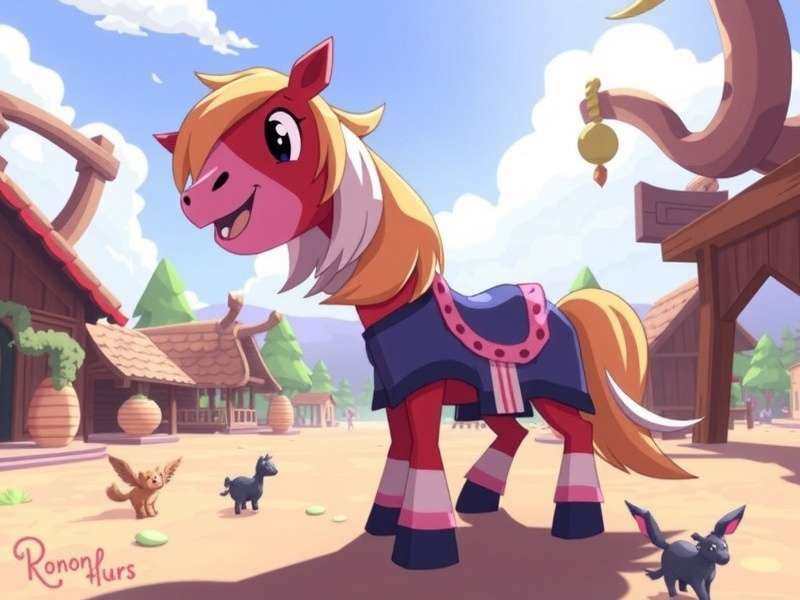
The Absolute Fundamentals: Light Source & Colour Theory
Before you touch the colour picker, you must decide: Where is the light coming from? Consistency is non-negotiable. Top-down sunlight? A lantern held low? This decision dictates everything. For a classic, pleasing look, a light source from the upper-left is a community favourite, mimicking natural reading light.
Now, the biggest rookie mistake: using black or grey for shadows. Shadows have colour. If your pony's coat is a warm yellow, its shadows should lean towards a warmer, muted orange or purple. If you're styling a pony tail with bright blue hair, try a deeper, desaturated blue or a cool indigo for the shadows. This principle applies to everything, from choosing your pony town grass color for island decorating to selecting hues for pony town outfit ideas.
Pro Tip: Use the "Multiply" layer mode (if available in your external editing software) with a dark blue or purple to quickly add realistic, coloured shadows over your base coat colour.
Practical Exercise: Shading a Simple Sphere
Think of your pony's body parts as simple 3D forms: the torso is a cylinder, the head a sphere, the legs as smaller cylinders. Practice shading these basic forms first. Where the light hits directly is your highlight (lightest colour). The core shadow is the darkest band, opposite the light. Then, reflected light often bounces back onto the shadowed side, making it slightly lighter near the edge.
This foundational skill will help you understand complex shapes, whether you're designing a spooky character for a dnc meaning (Do Not Copy) themed event or a festive one using the latest pony town snow code for a winter look.
Advanced Techniques: Ambient Occlusion & Subsurface Scattering
Once you've nailed basic form shadows, two concepts can add unbelievable realism: Ambient Occlusion (AO) and Subsurface Scattering (SSS).
AO refers to the soft, darkening in crevices where surfaces meet and light struggles to reach—like where the mane meets the neck, under the chin, or where legs connect to the body. Adding subtle, dark-toned shading in these areas "grounds" your pony's parts together.
SSS is the effect of light scattering inside a semi-translucent material. It's crucial for making ears, horns, and even certain pony tail styles look alive. Add a soft, warm glow on the shadowed side of a pony's ear—as if light is passing through it from behind. This is a hallmark of expert work.
These techniques are what make scenic builds in breezy town or intricate character designs for a ponte bridge roleplay feel so immersive. They're about thinking of light as a physical entity interacting with form.
Mastering Pony Town's In-Game Tools for Shading
Pony Town's built-in editor is more powerful than many realise. The key is the "Highlight" and "Shadow" colour slots. Don't just use a lighter/darker version of your base coat. Follow the colour theory rules above.
- Brush Softness: Use a soft-edged brush for gradual blends (like on rounded cheeks) and a harder edge for defined cuts (like sharp armour or hair strands).
- Layering: Think in layers. Apply broad shadow shapes first, then refine with smaller, darker accents for AO.
- Reference: Always have a reference! Look at how light falls on real horses, on plushies, or in your favourite cartoons.
Consider the mood. A pony in sleepy town might have long, soft shadows from a low evening sun, while one in a bright, breezy town meadow might have crisp, high-contrast shadows from a midday sun.
Community Showcase & Interview Insights
We sat down with 'MistyPalette', a renowned artist known for breathtakingly soft, luminous ponies. "My secret," they shared, "is never using pure white or pure black. My highlights are a pale, warm cream, and my deepest shadows are a rich, dark violet. It creates harmony instantly." This approach to colour is visible in the best pony town outfit ideas shared on forums.
Another trend from the community: environmental storytelling through shading. A pony might have a greenish reflected light on its underside if standing on a vibrant pony town grass color, or a blue glow if near a custom pony town snow code effect. This level of detail ties your character to the world.
Common Shading Pitfalls and How to Avoid Them
The "Muddy" Pony
Using colours that are too desaturated or mixing too many conflicting shadow colours can make your pony look dirty. Stick to a coherent shadow palette.
Ignoring the Light Source
Shading randomly from multiple directions destroys the illusion. Pick one light source and stick to it religiously across the entire design, from the main body to the smallest accessory in your pony town outfit ideas.
Search for More Guides
Want to learn more about specific customisation topics?
Rate This Tutorial
How helpful did you find this guide?
Share Your Thoughts & Creations
Have a shading tip of your own? Show us how your pony turned out!
Final Words: Practice Makes Permanent
Shading is a journey. Start simple, master the light source, and gradually incorporate colour theory and advanced effects. Don't be afraid to experiment with different styles—maybe a cel-shaded look for a comic-inspired pony, or ultra-soft shading for a dreamy resident of sleepy town.
Remember, every expert artist started where you are now. Use this tutorial as your foundation, dive into the community for pony town island ideas and inspiration, and most importantly, have fun bringing your unique vision to life in Pony Town.
For further reading, explore our guides on what is a pony for lore, or pony town island ideas to create the perfect home for your newly-shaded character.